OTT Platforms
OTT platforms are popular with advertisers for one simple reason: that’s where TV viewing continues to shift. In Nielsen’s June 2025 report, streaming represented 46.0% of total television usage—nearly half of all TV time. Nielsen — The Gauge (June 2025) Nielsen
What OTT means (and why it matters)
- OTT (Over-the-Top) describes video content delivered over the internet — without a cable or satellite provider.
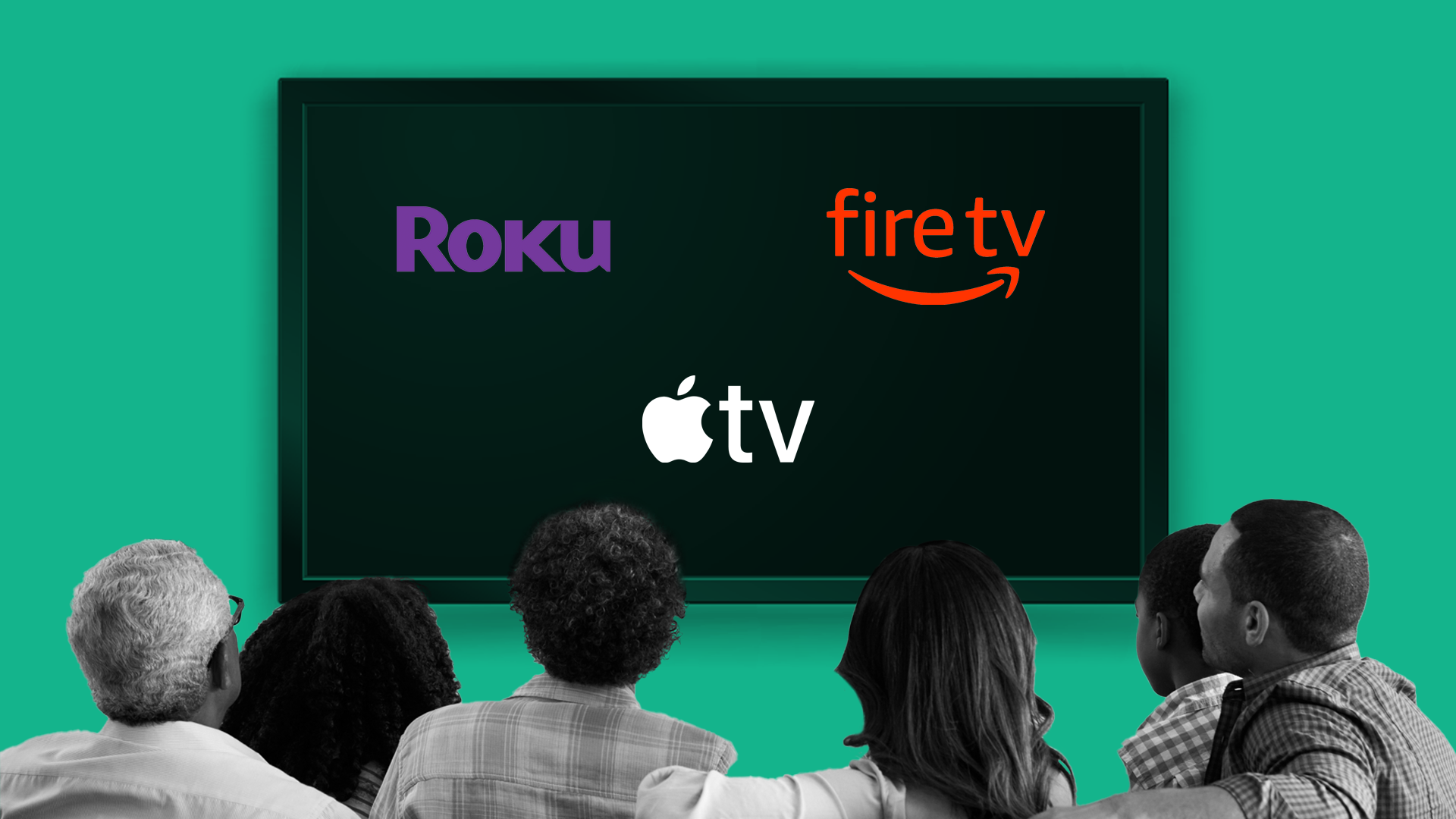
CTV (Connected TV) is the screen/device where OTT plays (Smart TVs, Roku, Fire TV, Apple TV, gaming consoles). - In other words: OTT is the content environment. CTV is the viewing surface. Programmatic is how you buy it efficiently at scale.
The OTT Market (2025)
The OTT (Over-the-Top) market continues to be one of the most attractive channels for advertisers as streaming becomes the dominant way audiences consume TV content. In the U.S., streaming now accounts for nearly half of total TV viewing time, surpassing traditional cable and broadcast in several months throughout 2024–2025 (Nielsen).
As adoption grows, OTT and Connected TV (CTV) offer advertisers massive scale. More than 90% of U.S. households now own at least one connected TV device, making streaming a true mass-reach channel (Parks Associates).
The advertising opportunity is expanding rapidly. U.S. CTV ad spend is projected to reach $26.6 billion in 2025, driven by the growth of ad-supported streaming tiers across major platforms (IAB / eMarketer).
OTT Platforms and Devices
The OTT ecosystem continues to grow across platforms and devices, including Roku, Amazon Fire TV, Google Chromecast, smart TVs, and gaming consoles. Platforms like Roku, Hulu, Amazon Prime Video, YouTube, Netflix, and Disney+ all offer dedicated advertising environments designed for premium video on the big screen.
Roku, for example, provides 15- and 30-second video ads, interactive ad formats, and home-screen placements, making it one of the largest independent CTV ad platforms in the U.S. (Roku).
Ad-Supported OTT Is the Dominant Model
While subscription-only streaming still exists, ad-supported OTT is now the fastest-growing business model. Nearly every major streaming service—including Netflix, Disney+, Hulu, and Amazon Prime Video—offers an ad-supported tier.
OTT ads typically run pre-roll, mid-roll, or post-roll, and most formats are non-skippable. As a result, OTT ad completion rates regularly exceed 90%, far outperforming standard digital video (Innovid / IAB).
Why Advertisers Are Shifting to OTT
OTT advertising combines the impact of television with the precision of digital:
- Programmatic buying and audience targeting
- High completion and attention rates
- Flexible budgets compared to linear TV
- Ability to advertise within live events, sports, and premium programming
As viewers continue to move away from traditional TV, OTT/CTV represents one of the largest and fastest-growing opportunities in digital advertising.
Advertisers Keep Moving Budget to OTT & CTV
Streaming is now the dominant growth area for “TV”
Industry outlooks show digital video is continuing to take share from linear. The IAB projects digital video will reach ~$72B in 2025 and account for ~58% of total TV/video ad spend. IAB report hub IAB
Connected TV is a major driver of that shift. One IAB-based forecast puts U.S. CTV ad spend at $26.6B in 2025. TVTechnology summary of IAB findings TV Tech
Advertisers are prioritizing OTT / CTV right now
1) The market is scaling quickly
CTV is now a “must-buy” channel for many advertisers, with U.S. connected TV ad spend projected to reach $26.6B in 2025. IAB coverage (CTV spend forecast, StreamTV Insider
And the broader digital video ecosystem is projected to reach $72B in 2025, capturing 58% of TV/video ad spend. IAB report coverage TV Tech
2) Viewers are spread across apps
Consumers don’t “turn on a channel” anymore. They open an app. And many of the largest platforms now include ad-supported tiers that expand premium inventory for brands.
For example, Netflix reported its ad-supported plan now reaches 94M+ global monthly active users, per StreamTV Insider
3) OTT/CTV is premium attention with digital control
OTT ads typically run:
- full-screen
- in long-form content
- in a lean-back environment
- with stronger completion behavior than skippable, feed-based video
And because buying is programmatic, advertisers can manage:
- audience targeting
- reach + frequency
- measurement and outcomes
OTT platforms advertisers can buy across (examples)
Premium subscription platforms with ads
These are long-form, premium environments where brands typically see strong attention:
- Hulu
- Netflix (Ad Tier)
- Disney+ (With Ads)
- Max (With Ads)
- Prime Video (With Ads)
- Peacock
- Paramount+
Netflix’s ad-supported plan has scaled rapidly, with Netflix reporting 94M+ global monthly active users on that tier. Netflix Upfront 2025 Netflix
FAST (Free Ad-Supported TV)
FAST is growing quickly because it feels like linear TV but is bought like digital:
- Pluto TV
- Tubi
- Freevee
- The Roku Channel
Device / OS-level inventory (often overlooked reach)
These ecosystems sit at the entry point of streaming and add scalable household reach:
- Roku OS
- Samsung TV Plus
- LG Channels
- Vizio WatchFree+
How OTT advertising works (in practice)
Most OTT services monetize through one (or both) models:
- Subscription (some ad-free, some ad-supported tiers)
- Ad-supported (commercial breaks within content)
Programmatic OTT buying lets advertisers bid and deliver ads based on:
- audience (demo, geo, interest, in-market behavior)
- context (genre, content type)
- device and household patterns
- frequency and reach controls
Common OTT ad formats
OTT is no longer “just a :30.”
- In-stream video ads (pre-/mid-roll, typically 15–30 seconds)
- Interactive/QR-enabled video
- Home screen placements (where available)
- Pause placements (where available)
Because OTT viewing spans screens, creative should be built TV-first (safe text, clean framing, strong branding early) while still working on mobile and desktop.
OTT marketing (what to plan for)
A strong OTT strategy typically answers:
- Who are we trying to reach (and what signals define them)?
- Where do they actually watch (premium apps, FAST, device ecosystems)?
- What is the objective (reach, incremental reach, site visits, conversions)?
- How will we manage frequency across fragmented supply?
That’s the advantage of programmatic OTT: it restores scale, control, and measurement in a viewing world that no longer lives on a single network.