What Is CTV?
CTV (Connected TV) refers to a television (or TV device) that connects to the internet so viewers can stream content through apps. Traditional TVs can’t connect online on their own—programming comes via cable, satellite, or over-the-air broadcasts. A connected TV experience happens either through built-in connectivity (Smart TVs) or through an external device (like a streaming stick).
Streaming is now a major share of how people watch TV. In Nielsen’s June 2025 report, streaming represented 46.0% of total TV usage. Nielsen — The Gauge (June 2025)
Connected TV vs Smart TV
- Smart TV: a television manufactured with built-in internet features and app stores (Samsung, LG, Sony, Vizio, etc.).
- Connected TV: a broader category that includes Smart TVs and TVs connected via:
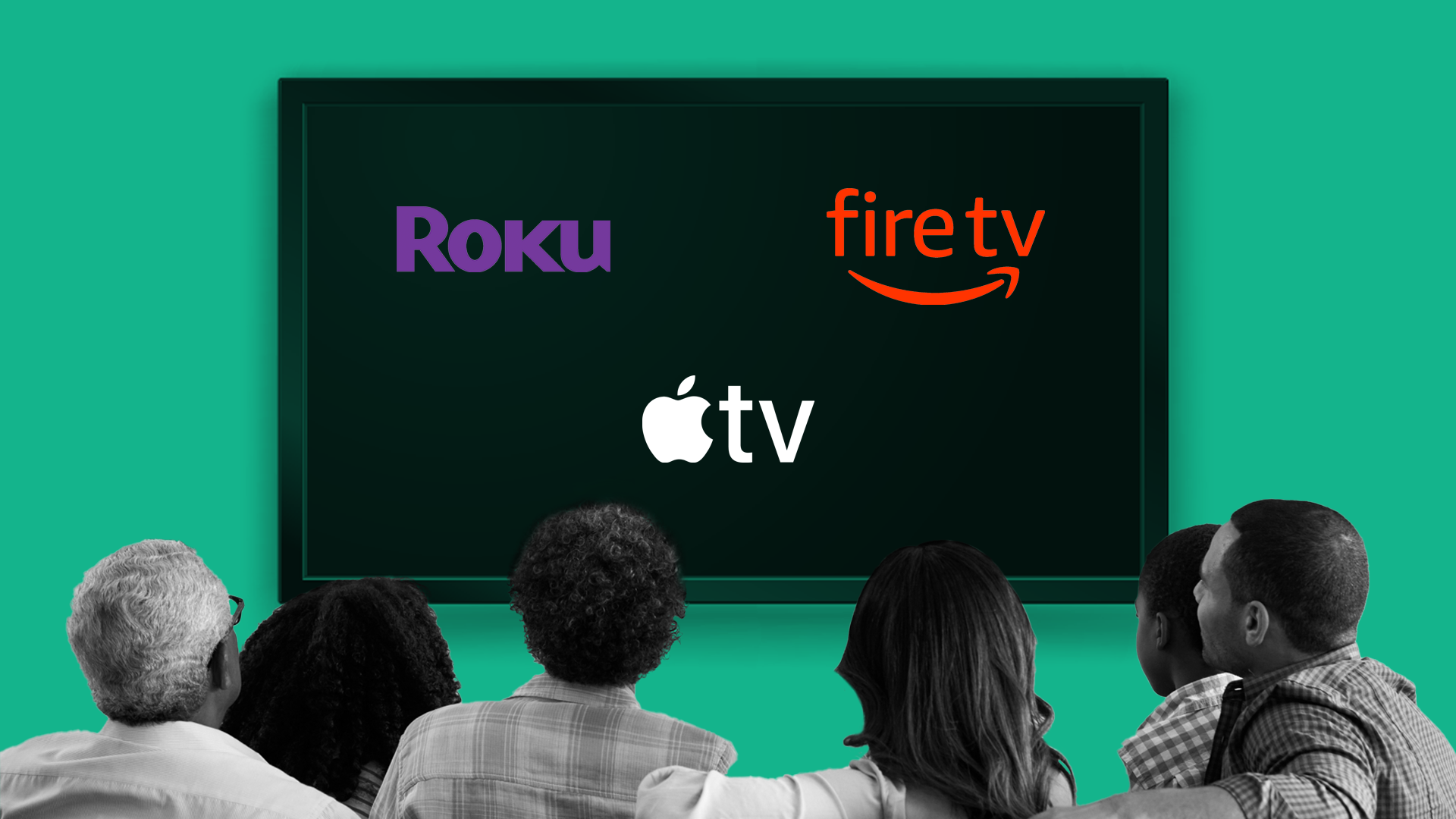
- streaming devices (Roku, Fire TV, Apple TV, Chromecast/Google TV)
- gaming consoles (PlayStation, Xbox)
- other internet-connected viewing setups
- streaming devices (Roku, Fire TV, Apple TV, Chromecast/Google TV)
Connected TV Advertising
CTV advertising refers to video ad campaigns that appear on internet-connected TVs inside streaming environments. It has accelerated alongside cord-cutting as households shift budgets and attention from linear TV to streaming.
CTV advertising is often:
- targeted (audience-based vs. broad ratings)
- measurable (delivery + performance signals where measurement is enabled)
- optimized in-flight (campaigns can adjust while live)
Connected TV Companies
Connected TV is powered by multiple hardware ecosystems:
Smart TV manufacturers
Streaming device platforms
- Roku
- Amazon Fire TV
- Apple TV 4K
- Chromecast / Google TV
Gaming consoles
Connected TV vs OTT
These terms are related, but not identical:
- OTT (Over-the-Top) refers to streaming content/apps delivered over the internet (Hulu, Peacock, Disney+, Max, Prime Video, FAST channels, etc.).
- CTV refers to the TV screen/device where OTT content is viewed.
Example: Watching Hulu on a Roku-connected TV is OTT content delivered on a CTV device.
Connected TV vs Linear TV
Linear TV is scheduled programming watched at a set time and channel. Measurement is often limited and buying is typically based on broad demos and ratings.
CTV is:
- on-demand or live streaming through apps
- delivered via internet-connected devices
- capable of more granular targeting and reporting
What Is CTV Advertising?
CTV advertising is the purchase of ads that appear on internet-connected televisions. Most commonly, these are:
- in-stream video ads (pre-/mid-roll) in 15–30 second formats
- placements that can also include pause ads and home screen inventory depending on supply source
CTV ad buying is frequently executed via programmatic advertising, which supports audience targeting, frequency management, and optimization.
What Is the CTV Experience?
From the viewer’s perspective, CTV ads show up during streaming—often during natural ad breaks in TV series, movies, or live programming. Live streaming is commonly accessed through services like:
Brands can align creative and placements to goals like:
- brand awareness
- direct response (site visits, conversions, app installs, etc.)
Connected TV Advertising Statistics
- Streaming reached 46.0% of total TV usage in June 2025. Nielsen — The Gauge (June 2025)
- U.S. CTV ad spend is projected to reach $26.6B in 2025. StreamTV Insider (IAB summary)
- Digital video ad spend is projected to reach $72B in 2025 and capture ~58% of TV/video ad spend. IAB — 2025 Video Ad Spend Report