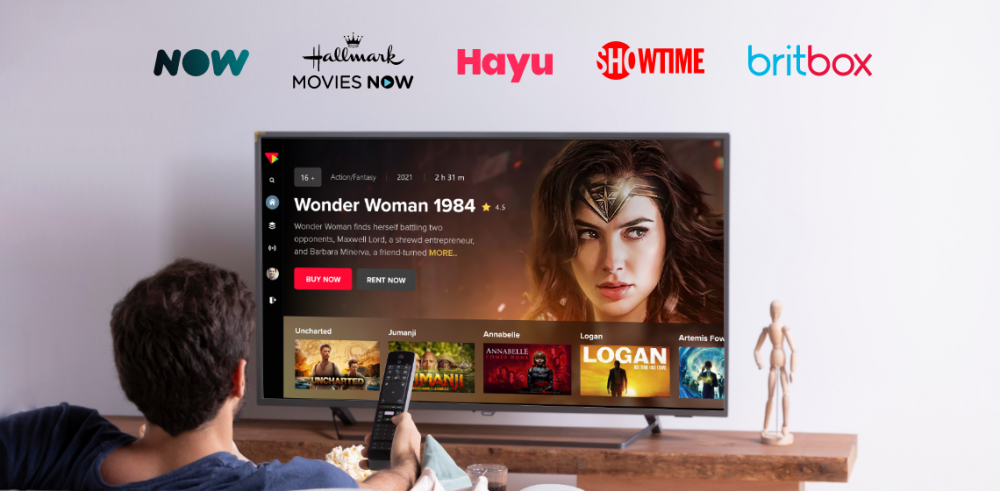
What is OTT Advertising?
OTT advertising refers to video ads delivered inside streaming apps over the internet—no cable or satellite provider required. These ads run in OTT environments like Hulu, Peacock, Disney+, Max, Prime Video (with ads), FAST channels, and more, appearing during natural ad breaks within premium streaming content.
A key reason OTT works so well: streaming is now a major share of TV usage. In Nielsen’s June 2025 report, streaming accounted for 46.0% of total television usage. Nielsen — The Gauge (June 2025)
OTT vs. CTV
People often use “OTT” and “CTV” interchangeably, but they’re not identical:
- OTT (Over-the-Top) = the streaming content/apps delivered over the internet (Hulu, Netflix, Disney+, etc.)
- CTV (Connected TV) = the TV screen/device connected to the internet where streaming is watched (Smart TVs, Roku, Fire TV, Apple TV, consoles)
OTT can run on CTV—plus mobile, tablet, and desktop. CTV is specifically the television-screen experience.
Why OTT targeting is different from linear TV
OTT brings digital controls into TV-quality environments.
Compared to linear TV (traditional network/cable spots):
- OTT allows tighter audience targeting (geo, household/device signals, interest and in-market behavior, etc.)
- Buying is often auction-based (programmatic), giving more flexibility by audience and budget
- Measurement can include reach/frequency controls, plus outcome signals (where enabled)
What is an “OTT release”?
OTT also shows up in entertainment language. An “OTT release” generally refers to a movie or series being distributed on a streaming platform instead of (or in addition to) theaters or linear TV. Streaming platforms pay for licensing rights (sometimes across versions/languages), and many also produce in-house originals exclusive to their services.
OTT platforms examples advertisers care about
Most ad inventory comes from:
- Premium subscription platforms with ads (e.g., Hulu, Peacock, Disney+ with ads, Max with ads, Prime Video with ads)
- FAST platforms (Free Ad-Supported TV like Pluto TV, Tubi, Freevee, The Roku Channel)
- Device/OS-level ecosystems (Roku OS, Samsung TV Plus, etc.)
A major signal of how big ad-supported streaming has become: Netflix reported its ad-supported plan now reaches 94M+ global monthly active users.
How OTT advertising works
- Viewers open a streaming app on a connected device
- The app plays content with ad breaks (for ad-supported viewing)
- Ads are served based on the campaign’s targeting and buying method
- Performance signals (delivery, completion, reach/frequency, and downstream actions where measurable) inform optimization
Buying OTT ads: direct vs programmatic
Advertisers typically access OTT inventory in two ways:
- Direct buys: fixed placements within a specific publisher/platform package
- Programmatic buys: automated auctions that allow audience targeting and optimization across broader supply
Programmatic is often preferred when you want scale + targeting + frequency control across fragmented listening/viewing behavior.
OTT advertising examples (what “good” looks like)
Strong OTT creative usually:
- brands early and clearly (TV-safe)
- keeps the message simple (one idea)
- uses readable on-screen text (large, high contrast)
- includes a clean CTA (QR, short URL, or clear “next step”)
- feels native to premium viewing (high production polish)
Benefits of OTT advertising for marketers
OTT supports both branding and performance objectives:
- premium reach in streaming environments
- audience precision and household-level thinking
- measurable optimization (where enabled)
- flexible budget entry points compared to linear TV